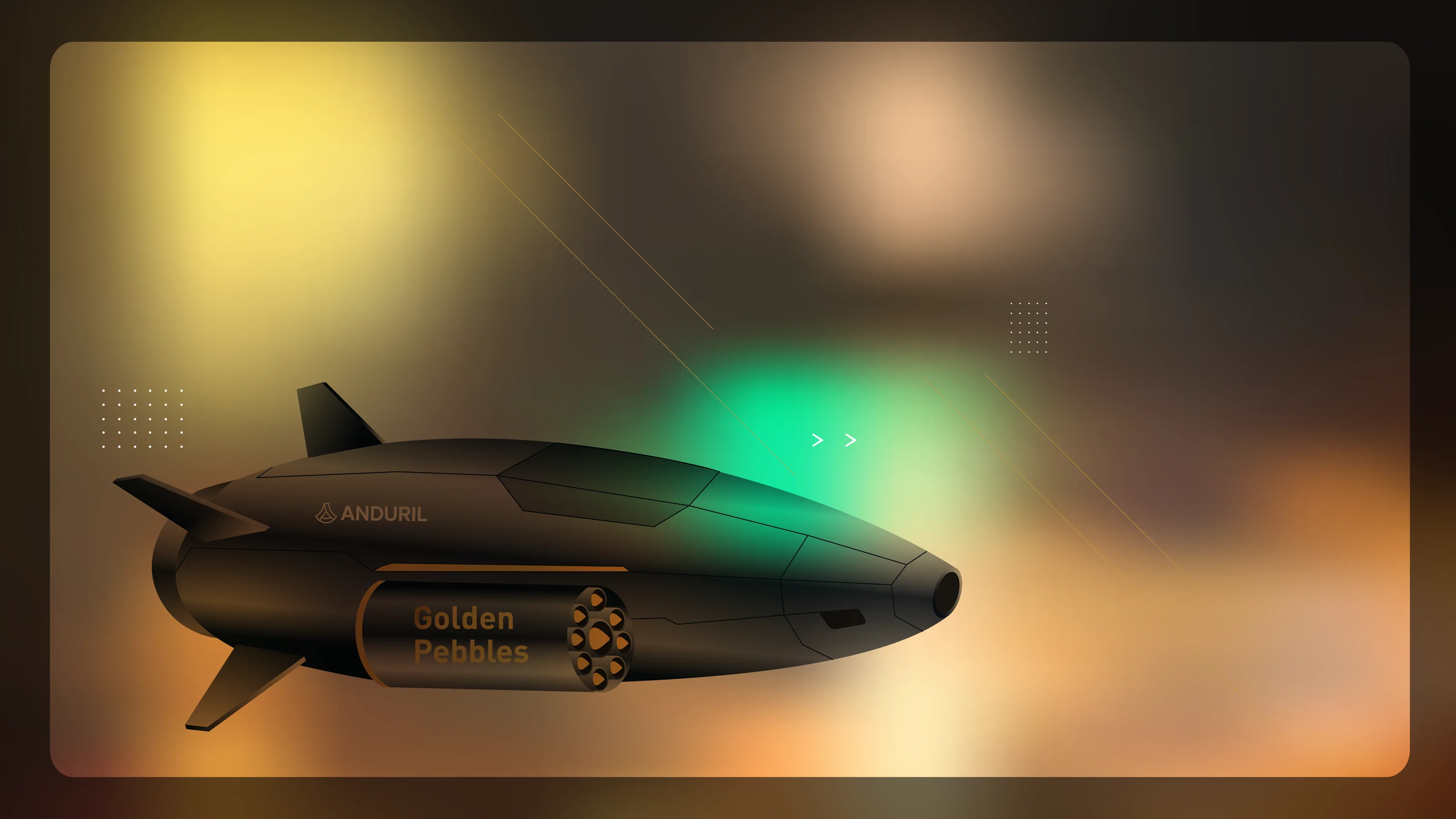
GoldenPebbles
A space-based interceptor that waits in low Earth orbit and stops a missile in its first minutes of flight. I defined the product end to end, from the concept of operations and system requirements to the production plan, and packaged it the way a program team would take it to a customer.
- ~6 km/s
- Δv for each interceptor
- < 2 min
- Window to intercept in boost phase
- 3 to 5 yrs
- Life of each host vehicle in low Earth orbit
Space-based missile defense is back on the agenda, and the hardest version of the problem is boost phase: hitting a missile from orbit in the first two minutes after launch, before it can release anything. Most public material covers the policy. Very little explains how the system would work, who approves the engagement, or how you would build thousands of interceptors at a cost anyone would fund.
I treated it as a zero-to-one product definition for Anduril: one vehicle, one mission thread, requirements an engineer could check, and a production plan a buyer could believe. Every deliverable had to work for two audiences at once, the technical reviewers and the executives who own the budget.
- Role
- Product lead, self-initiated
- Scope
- CONOPS, mission thread, requirements, production plan
- Audience
- Program offices, engineers, and executives
- Stack
- Illustrator, Photoshop, AI-assisted prototyping
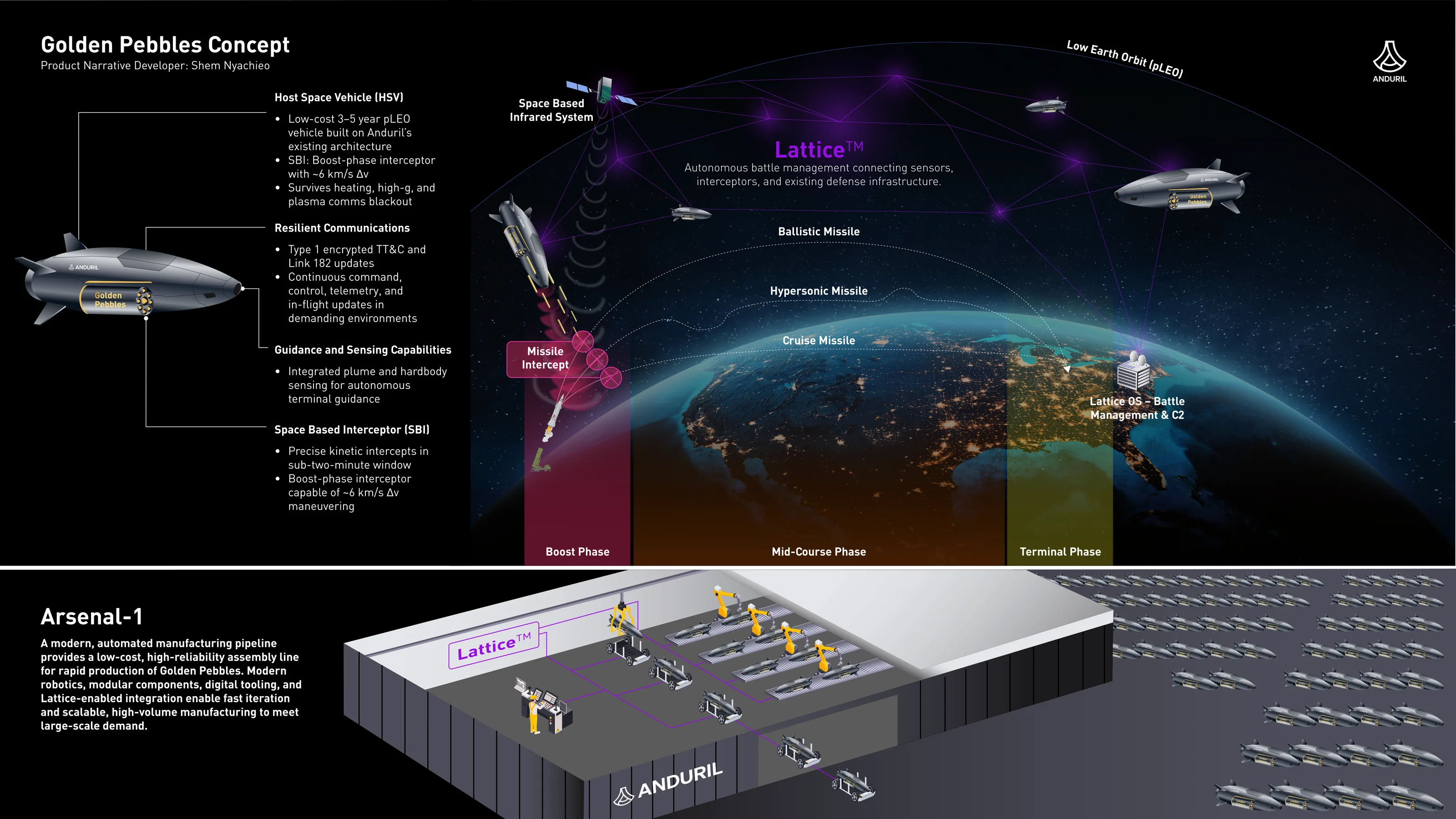
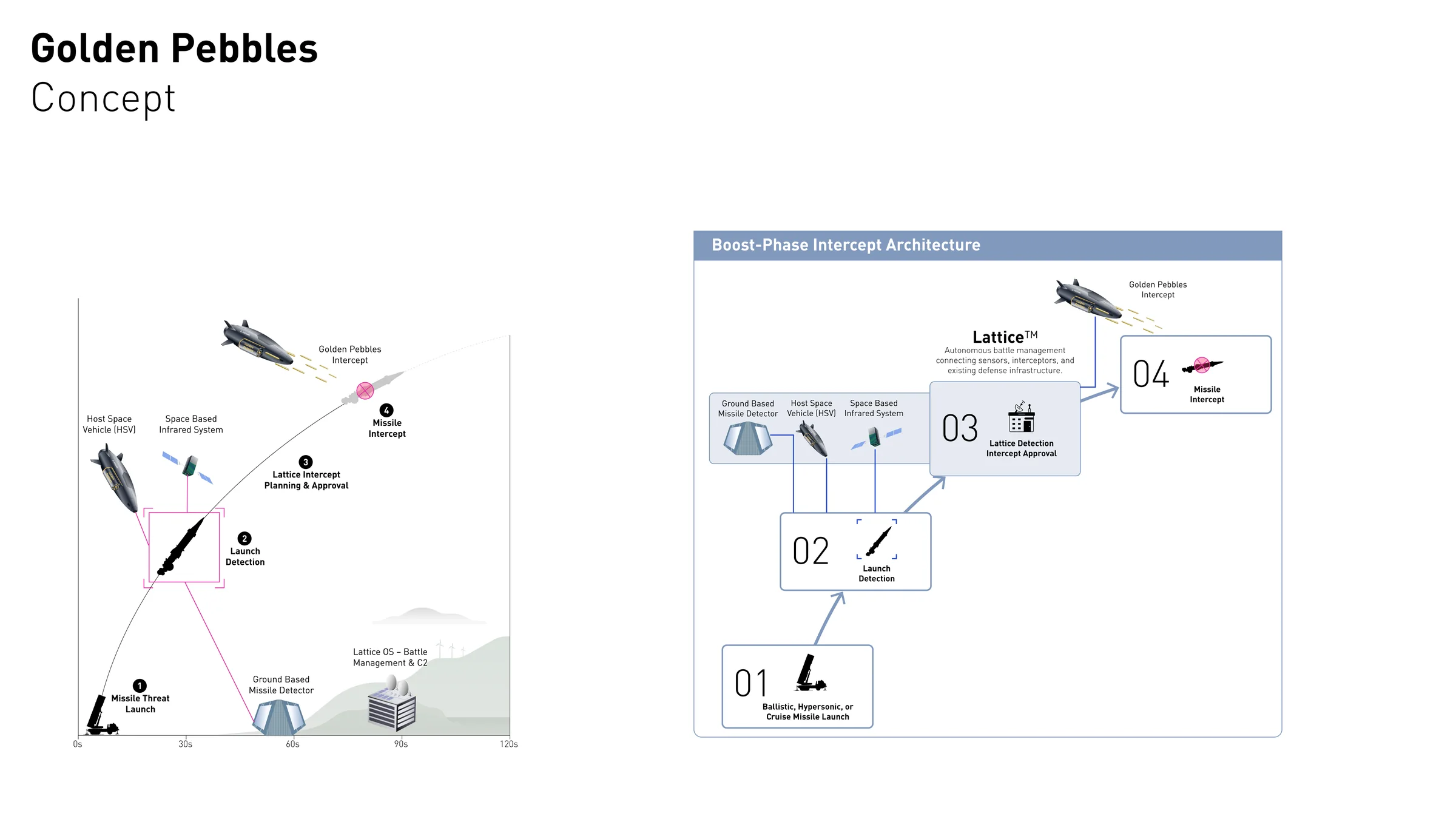
One view carries the whole concept of operations: a satellite detects the launch, Lattice routes the track to the ground station where a person approves the engagement, and Golden Pebbles intercepts while the missile is still climbing, so nothing reaches the United States. It runs live, with the network, orbit, and missile tracks driven from the source vectors.
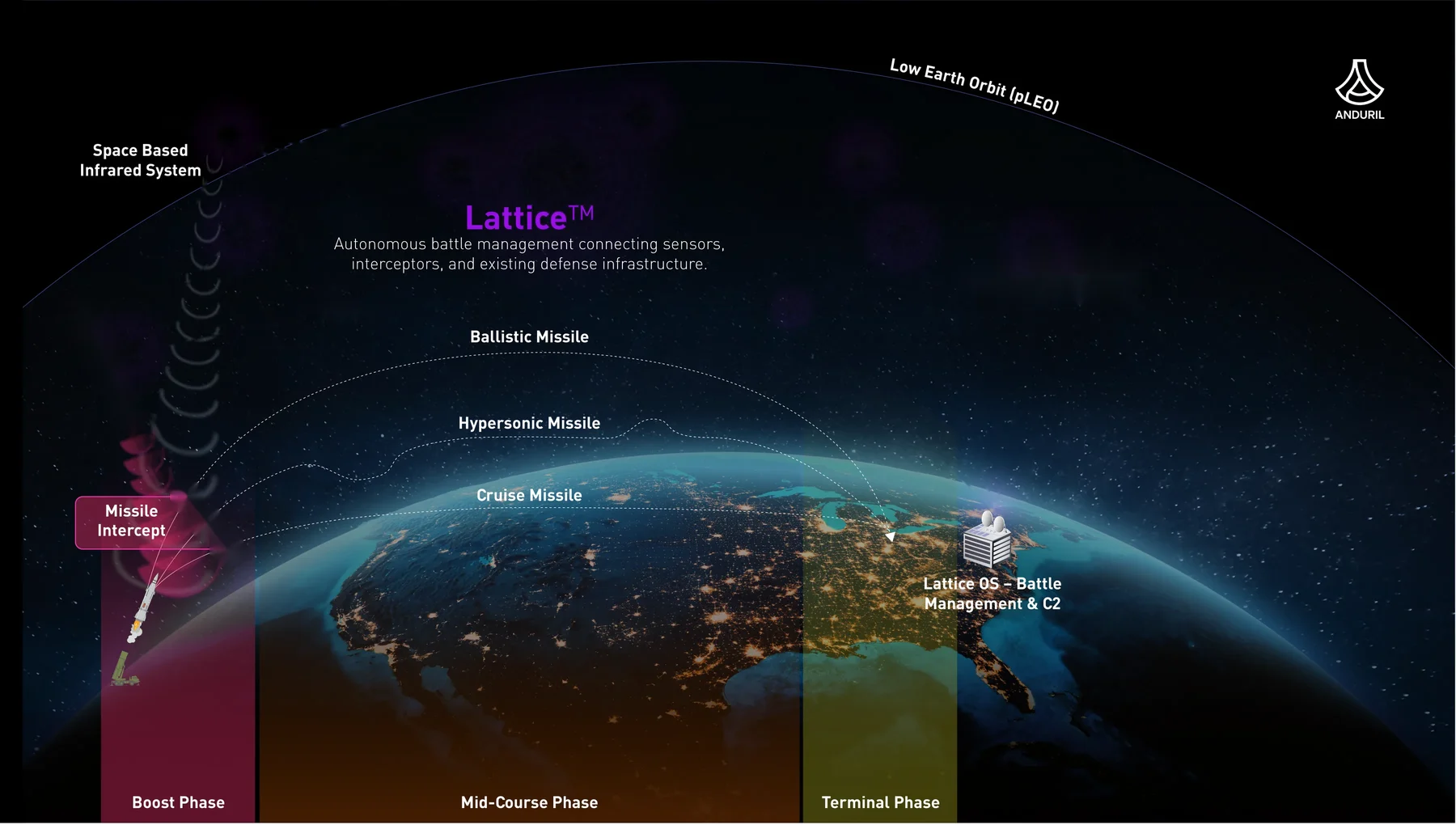
8 stopsThe whole mission
A satellite sees the launch, Lattice carries the track to the ground station that approves the shot, and Golden Pebbles strikes while the missile is still climbing. Nothing reaches the United States.
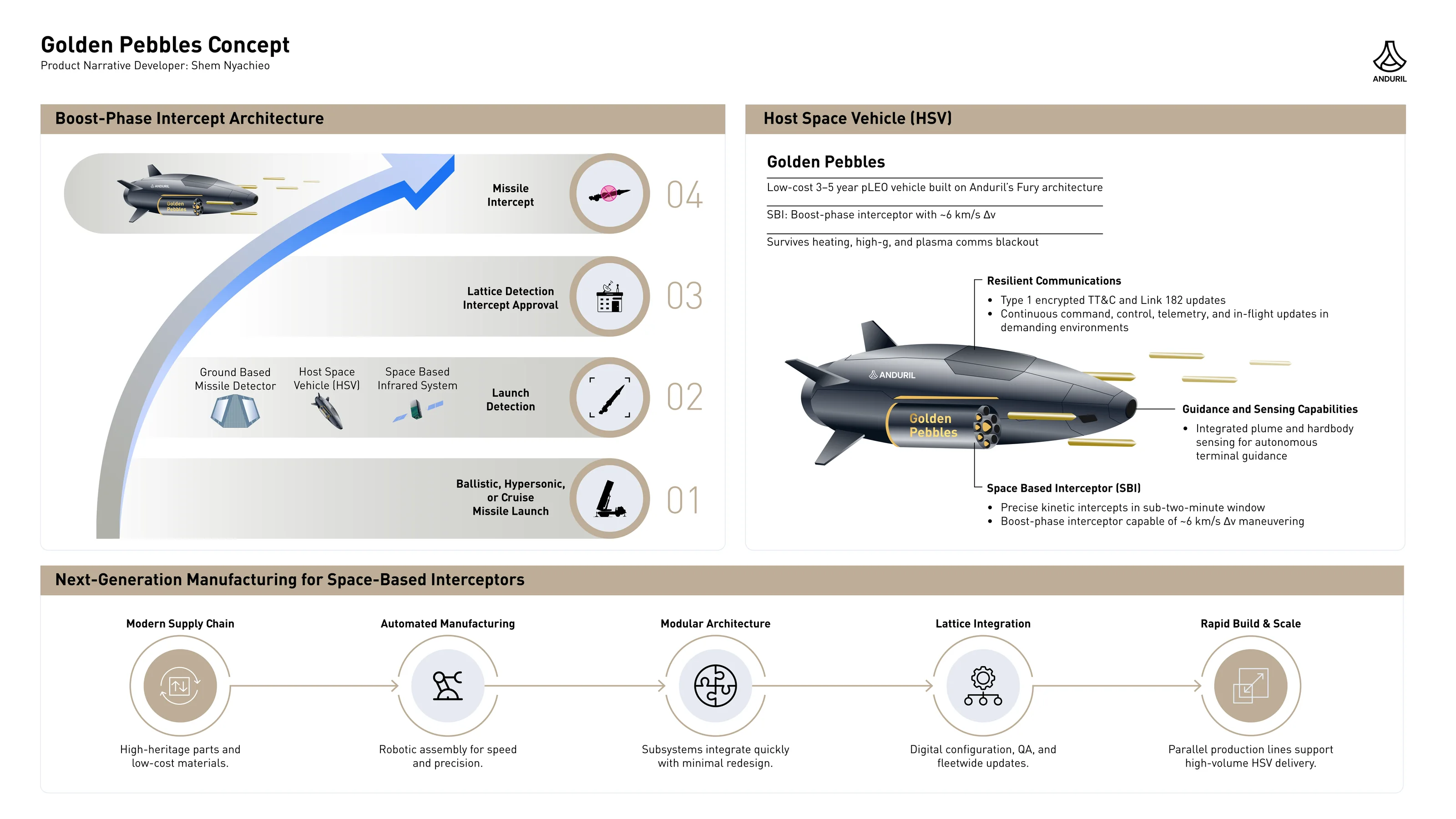
The mission thread in four steps: launch, detection, a human decision, and the intercept. Autonomy handles the speed, and a person keeps the decision to engage, which is a requirement and not a detail. Scroll to run the sequence.
- 01
Missile launch
A ballistic, hypersonic, or cruise missile leaves the pad.
- 02
Launch detection
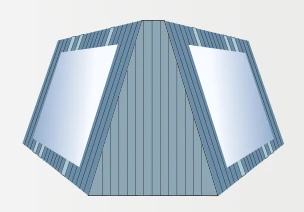
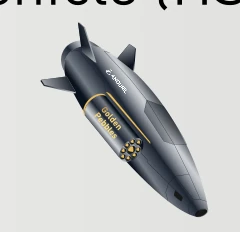
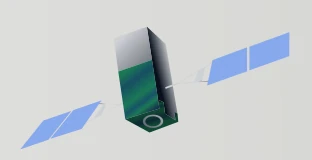
A ground-based missile detector, the host vehicle, and the Space-Based Infrared System all see the launch at once.
- 03

Lattice detection and intercept approval
Lattice fuses the tracks, picks the best interceptor, and a person approves the shot.
- 04
Missile intercept
Golden Pebbles releases a space-based interceptor and strikes in boost phase.
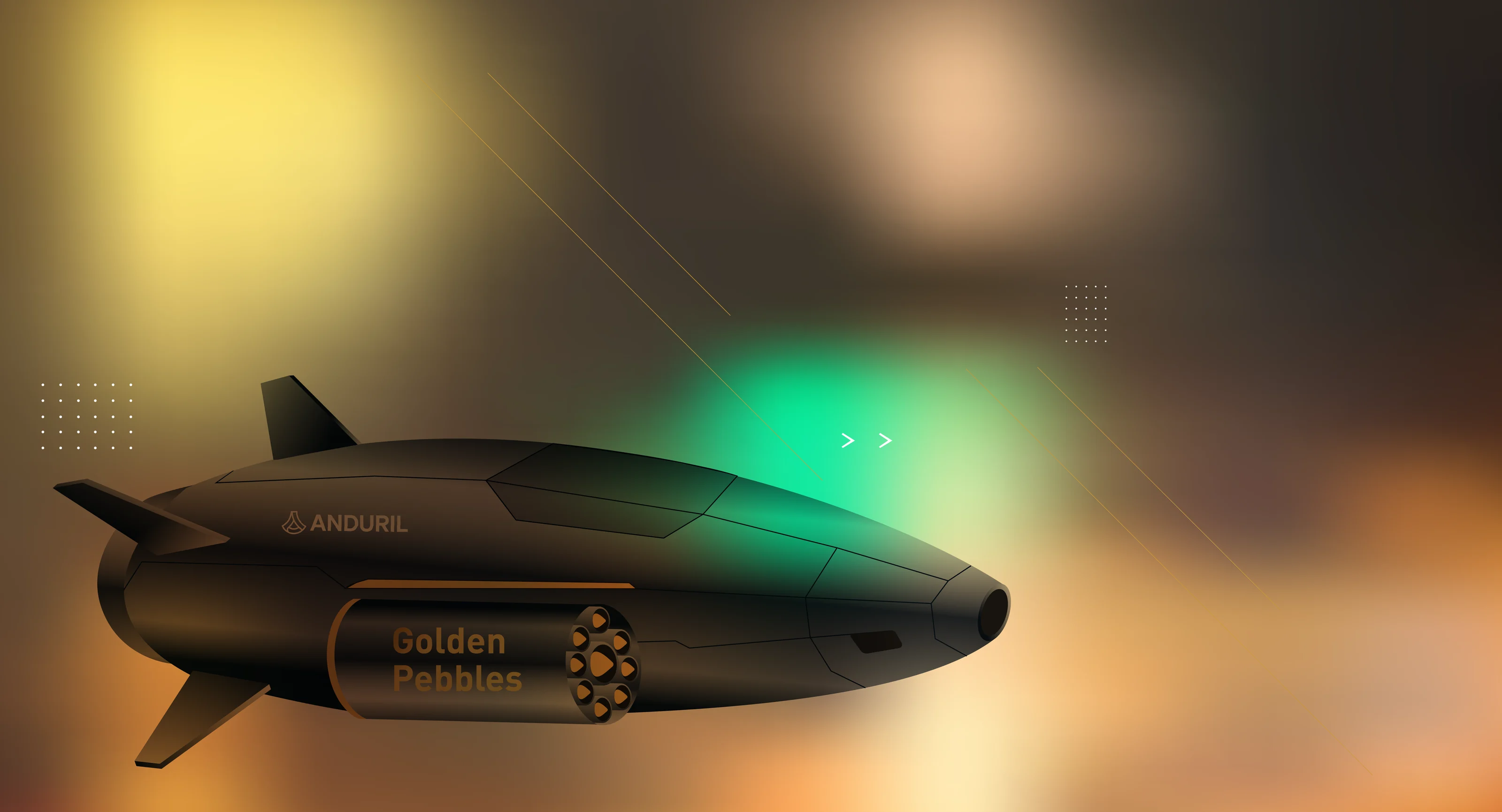
A concept only gets a second meeting if it looks buildable. I broke the host vehicle into four subsystems, the bus, the interceptors, guidance, and communications, each with a requirement an engineer can check and an executive can follow. Point at a subsystem to trace it on the vehicle.
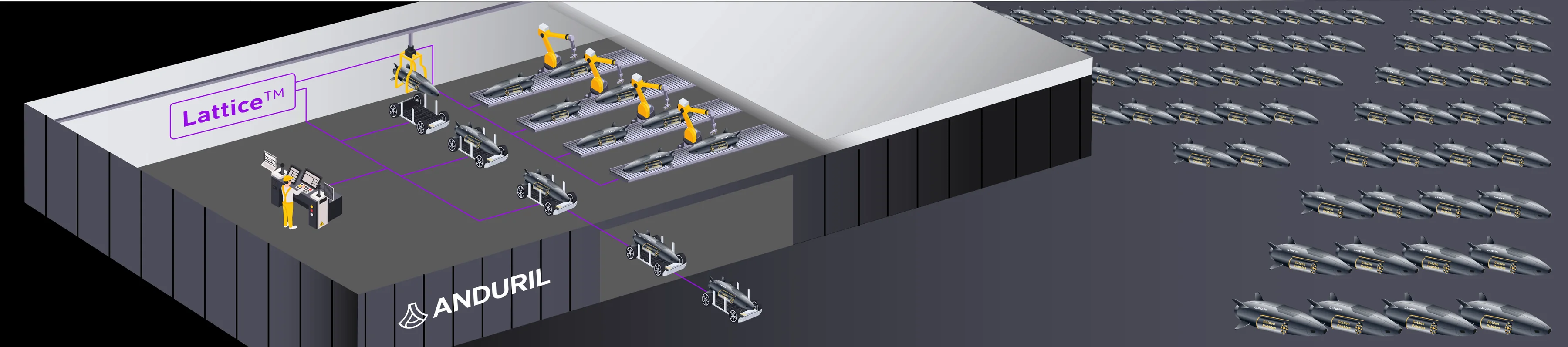
Unit cost decides whether this ships. A constellation needs thousands of interceptors, so I placed Golden Pebbles on Anduril’s automated Arsenal-1 line and reduced the production case to five points a buyer can repeat back.
- Modern supply chainHigh-heritage parts and low-cost materials.
- Automated manufacturingRobotic assembly for speed and precision.
- Modular architectureSubsystems integrate quickly with minimal redesign.
- Lattice integrationDigital configuration, QA, and fleetwide updates.
- Rapid build and scaleParallel production lines support high-volume delivery.
One narrative, two deliverables: a dark version for screens and live briefings, and a light version for written proposals. Drag the handle to compare them.
Each step tested one question: what does the audience need to understand first, and what can wait?
Discovery
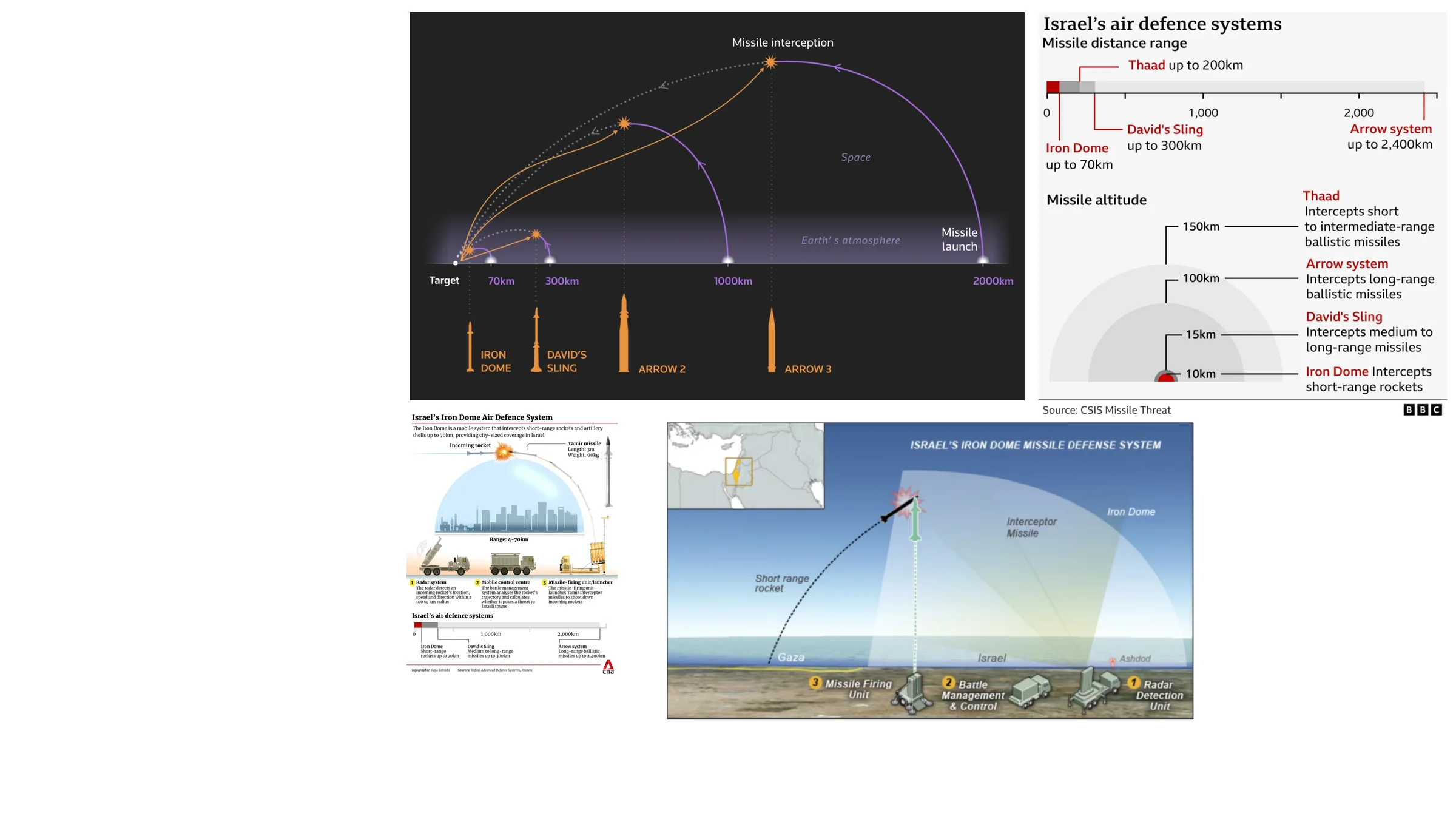
I started with the public record on missile defense: layered architectures, ranges, and altitudes from Reuters, CNA, and Lockheed Martin's Golden Dome brief. The open question was what the audience had to understand first, and what could wait for a second read.
Golden Pebbles is a self-initiated concept by Shem Nyachieo. It was not commissioned or produced by Anduril Industries, and the Anduril name and logo appear only as part of the concept. Research references: Reuters, CNA, and Lockheed Martin’s Golden Dome infographic. Manufacturing icons from the Noun Project.